
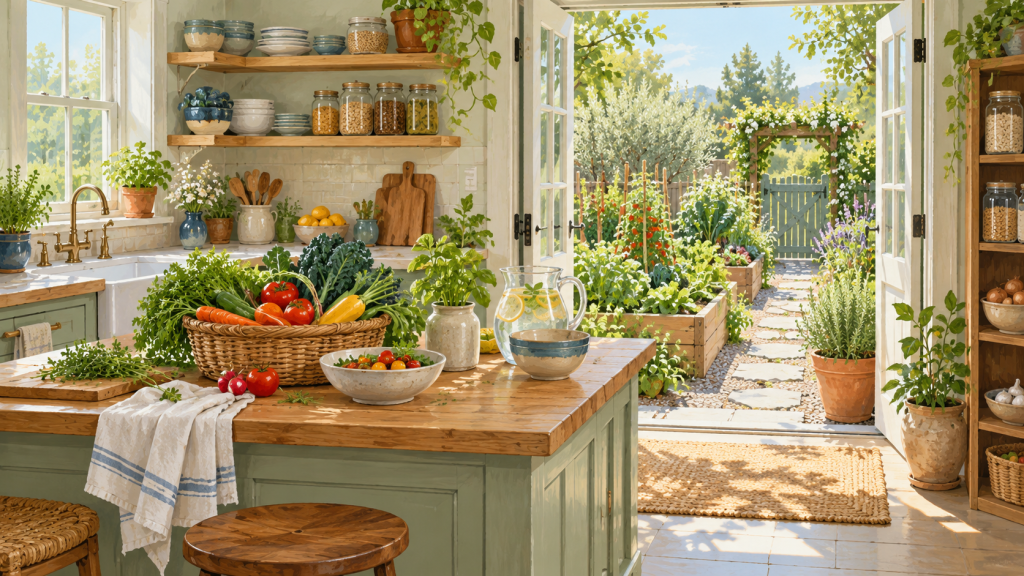
What does this soil need, and when is compost useful?
Define the problem, test for the right purpose and add only what the soil and crop need. Compost quality and maturity matter. Repeated additions can build salts or excess nutrients, so more material is not automatically a better garden.
Evidence checked October 15, 2026. No hands-on testing.
Decide what question you need answered
A weak plant does not by itself tell you to buy fertilizer or compost. Write the observation: poor growth in one bed, a drainage concern, repeated compost additions, salt concerns, or uncertainty about a new site. Separate a fertility question from a possible contamination question. Keep a simple record of previous amendments, crops, watering and problem areas.
CSU’s Soil, Water and Plant Testing Laboratory analyzes soil and related materials and provides crop-growth recommendations. The lab explicitly does not test herbicides or pesticides. Its fertility package is not a complete assessment of whether an unknown site is suitable for food growing. If property history raises a contaminant concern, ask an appropriate environmental authority or laboratory about the substances and sampling method before collecting soil.
Choose the test before taking the sample
- Describe the intended crop and problem. Tell the lab what has been added and what decision the result should support. Ask which analysis and interpretation are needed.
- Check the analyte list and total cost. Keep the dated price list, test code, extra analysis and shipping costs. Do not equate the word “complete” in a product name with every possible contaminant.
- Use the lab’s current sampling instructions. For vegetable beds the captured CSU instructions describe a composite of 10 to 15 subsamples at the stated six- or eight-inch depth. Confirm the proper depth and preparation for the actual purpose.
- Keep different areas separate. CSU requests separate samples where crop growth, soil colour or amendment/fertilizer history differs. Do not average away a distinct problem bed.
- Mix and label consistently. Follow the lab’s quantity, preparation and packaging directions. Use the same sample ID on the bag and complete submission form; retain a location sketch.
- Submit using the current form. Confirm delivery address, hours, payment arrangements and expected timing directly. This research did not submit or pay for a test.
- Interpret before shopping. Keep units, methods, crop assumptions and limitations with the report. Ask the lab or Extension adviser which change is needed, how much, and when to review it.
Dated laboratory observations, not a current quote or site clearance
| Observed price or scope | What it means | What remains to confirm |
|---|---|---|
| CSU S1: $47.50 per sample | Listed complete fertility analysis; price list effective July 1, 2026. | Current total, shipping, selected test and whether additional analyses are needed. |
| CSU S2: $40; $25 minimum charge | Other listed pricing on the same dated menu. | The appropriate package; a low price alone does not select the right test. |
| Herbicide/pesticide testing excluded | The lab states these are not offered. | A different provider and method if that is the actual question. |
| Metals listed separately | The fertility package is not a comprehensive environmental clearance. | Relevant analytes, sample design and interpretation for the site history. |
Use compost for a defined purpose
CSU’s compost guide says application rates depend on the material, salt potential, incorporation depth and desired result. It advises testing soil before applying an amendment. In established beds, first ask whether another addition is needed. Keep compost origin and available quality information with the soil record.
Compost releases nitrogen slowly. Repeated applications can leave phosphorus and potassium adequate or high without matching the crop’s current nitrogen need. Manure- or biosolids-derived products may carry substantial salts. A general application table is not a prescription for every soil or product. Ask for a result-based recommendation rather than automatically buying the same amount each season.
CSU also warns about unfinished compost: continuing decomposition can tie up nitrogen, and some immature material can injure roots. Dark colour alone is not a laboratory maturity result. Use the source’s maturity guidance, ask a supplier what is known about the product, and keep uncertain material out of an assumed finished-compost recommendation.
Begin with a manageable backyard pile
EPA’s home-composting guide describes a process that needs air, moisture, carbon-rich “browns” and nitrogen-rich “greens.” For a beginner pile, choose a practical location with drainage and water access. Collect suitable material, break larger pieces down and cover food scraps with browns.
EPA suggests two to three volumes of browns for each volume of greens and moisture like a wrung-out sponge. Turn or adjust the pile when it becomes too wet or poorly aerated. Keep pet waste, herbicide-treated material, diseased/pest-infested plants and the other excluded inputs out of a backyard pile. Check a municipal collection service’s own rules separately; an item accepted there may not belong in a home pile.
Do not promise a fixed completion date or assume the whole pile has reached a sanitation temperature. Conditions and care vary. Follow the source’s finished-compost guidance and keep unresolved contamination or material questions separate. Making a little suitable compost successfully is more useful than accumulating a large unmanaged pile.
Decision comparison: test, amend or keep observing
Question is unresolved
Choose the test and interpretation route first. Preserve separate areas and their histories.
An amendment is justified
Match material, maturity, salt information and quantity to the recommendation and crop.
No addition is justified
Keep the baseline and observations. Avoid buying a product simply because it is labelled beneficial.
Text alternative: Resolve the soil question before buying. Apply an amendment only when the evidence supports a material and quantity. If an addition is unnecessary, retain the baseline and monitor the garden.
Estimate volume only after a rate is chosen
A geometry example can help compare package sizes: a 24-square-foot area covered one inch deep requires 24 × (1/12) = 2 cubic feet of material before allowing for handling. This is a volume calculation, not a recommendation to apply one inch. The actual rate and incorporation method must come from the soil, crop and material assessment.
Common errors and the next action
- A fertility report does not certify an unknown site against every contaminant.
- Combining distinct beds into one sample can hide useful differences.
- Compost is not an unlimited substitute for every nutrient or a remedy for every drainage problem.
- A free feedstock still requires space, water, time, suitable inputs and management.
Your next action: write the soil question, select the appropriate test with the provider, and hold routine purchases until the result is interpreted. If compost is warranted, compare quality, total delivered cost and the amount actually needed.
Resources and their limitations
CSU Soil, Water and Plant Testing Laboratory
Desk-reviewed. CSU College of Agricultural Sciences
Provides a sample-submission route and analytical menu for deciding which soil inputs are needed.
Access and cost: Fee based. Price list effective July 1, 2026: S1 complete soil analysis $47.50 per sample; S2 basic $40; $25 minimum charge. Shipping, extra tests and later price changes are separate; confirm scope and total before submission.
Use it: Choose the question and test with the lab. Follow its soil-sampling instructions, use matching sample IDs on the complete horticulture form and bags, then mail or deliver to the current form address at CSU Spur. Keep the report and ask for interpretation.
Basis and limits: No sample, payment, turnaround or lab accuracy tested. The lab explicitly does not test herbicides or pesticides. S1 is a fertility package, not comprehensive environmental clearance; metals are separately listed. Prices are a dated observation, not a quote.
Alternatives: A laboratory recommended by the local Extension office with the needed analytes; environmental testing arranged for a specific contamination concern.
CSU — Using Compost in Colorado Gardens
Desk-reviewed. CSU Extension
Explains why compost rate, salt content, maturity and existing soil condition matter more than adding the same amount every year.
Access and cost: Free public reading; materials, equipment and individual advice may cost extra. No purchase or practical trial performed.
Use it: Read Application Rates and Salt Problems and Beware of Unfinished Compost. Obtain a relevant soil test and compost information before choosing whether and how much to apply.
Basis and limits: Application tables have material, salt and incorporation-depth assumptions. No universal application rate, Colorado commercial-compost law, guaranteed sanitation temperature or nutrient replacement formula adopted. No compost product tested.
Alternatives: Pause amendments until a soil result is interpreted; use suitable finished low-salt compost only where needed; manage a small home pile.
EPA — Composting At Home
Desk-reviewed. U.S. Environmental Protection Agency
A beginner pathway for a managed backyard pile, acceptable inputs, moisture and troubleshooting.
Access and cost: Free public reading; materials, equipment and individual advice may cost extra. No purchase or practical trial performed.
Use it: Choose a site and collect browns and greens. Follow the backyard input and avoidance lists, keep food scraps covered and adjust moisture and air. Use only finished material in the garden.
Basis and limits: Backyard process, not municipal acceptance rules or proof of pathogen destruction. Climate, attention and inputs affect completion time. No household pile, vermicomposting trial, purchased bin or contamination test evaluated.
Alternatives: A locally confirmed food-scrap collection service; a small shared compost project; purchased compost with suitable quality information.
Sources and review notes
The resource evaluations above use the following original pages. Public websites were checked on October 15, 2026 in America/Denver (October 16 UTC). A successful capture does not establish every linked page or individual result. No hands-on testing occurred.
- CSU Soil, Water and Plant Testing Laboratory
- CSU — Using Compost in Colorado Gardens
- EPA — Composting At Home
- Test Codes and Price List – Soil Testing Lab
- Soil Sampling Instructions – Soil Testing Lab
Related guides
Watersheds and soils; environmental information and testing; irrigation and plant health. Life event: starting a garden, evaluating an inherited bed or reducing recurring input costs.
Examples are teaching aids; no course completion, field navigation or practical intervention was tested.
Corrections: email director@victimsguide.com with the guide title, the point to correct and an original source. Please omit private medical, policy and identity records.

