
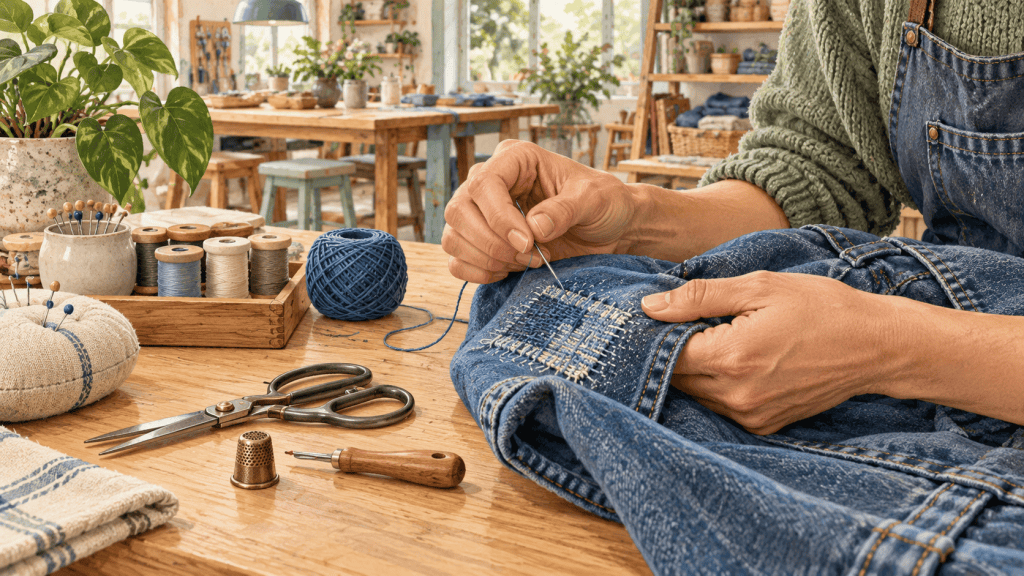
A shared workshop can provide tools, instruction and a community of people who know how to make things. Choose it around a defined project and the help you need, then confirm access before carrying materials to the door.
Evidence checked October 17, 2026 (America/Denver). Version 1.0. Original-source desk review; no practical testing.
What this guide helps you do
A route to finding and preparing for a supervised learning space. The provider's current rules and staff decisions govern the actual visit.
Describe a first visit that can succeed
Bring a short project description: what you want to make or learn, its approximate size, what you have already tried and where you need help. Start with a learning goal that can fit a supported session. A tool list alone does not establish that the space can host the project. Ask who will review the idea and what preparation they need.
Compare access arrangements, not just machines
Denver Public Library describes ideaLABs as free community makerspaces, with equipment varying by location. Its equipment page requires a library card for specialized-equipment reservations and states a two-hour, once-weekly limit per individual or group. Some equipment has drop-in access. Confirm the current location, tool policy and slot; a webpage does not reserve time. Source: Denver Public Library ideaLAB access and equipment.
Ask which instruction and supervision the process needs
Boulder's BLDG 61 woodshop describes guided appointments, skills classes and different appointment types. Some machines require staff supervision. Use that distinction when explaining your experience and process to a provider. Confirm the necessary orientation, the instructor's availability and the point at which you should ask for help. Do not infer permission to use another machine from completing one class. Source: Boulder library BLDG 61 woodshop access.
Get materials and files accepted before the visit
Ask staff to confirm the material, its condition, the file format and the preparation they need. DPL directs users to equipment-specific guides, including approved-material policies. Record whether the facility supplies a consumable or expects you to bring it. Ask about finishing time, storage, collection and disposal so the project can leave the space properly. Source: Denver Public Library ideaLAB access and equipment.
Consider the responsibilities of a shared resource
The Fab Charter treats a lab as a community resource with responsibilities for safe use, operations and shared knowledge. It is a useful framework for asking how a workshop handles instruction, cleaning and documentation. Network principles do not establish a particular site's opening hours, fees or suitability. Ask how that local organization puts the principles into practice. Source: Fab Foundation shared-lab and charter guidance.
Leave a record that helps the next visit
Keep the approved file version, materials, questions, instruction received and results. Note what worked and what must change before another attempt. Ask staff what information can be shared and what should remain private. A clear project record can help another learner understand your process, while the provider remains responsible for its own access and supervision decisions.
A record you can use
| Before booking | Ask and record |
|---|---|
| Learning and support | Can staff support the process and the experience level? What orientation is needed? |
| Access | Card, age, booking, supervision and accessibility arrangements. |
| Materials and files | Accepted material, preparation, file type and design review. |
| Full cost | Session, training, consumables, failed attempts and storage charges, if any. |
| Completion | Collection, cleanup, storage, documentation and unfinished-work arrangements. |
Learning route
- Describe: Define a first project or learning task.
- Compare: Check support, access and total cost.
- Confirm: Obtain a booking and material approval.
- Document: Record learning and the next revision.
Checklist
- The provider has confirmed it can support my proposed process.
- I know the orientation and supervision requirements.
- My booking and access conditions are confirmed.
- Staff have accepted my materials and file preparation.
- I know the likely costs and arrangements for unfinished work.
- I have a way to record and share the learning appropriately.
Resources and their limitations
Denver Public Library ideaLAB access and equipment
Denver Public Library ideaLAB access and equipment — Denver Public Library
Use. Choose a location and read its equipment policy; contact staff with the intended process, files and material questions.
Access and cost. Provider describes free makerspace/equipment access. Specialized-equipment reservations require a DPL card and are limited to two hours once weekly per individual/group; confirm current machine and material policies.
Review and limits. No booking, card eligibility, current slot, accessibility accommodation or project acceptance was tested. Equipment and site availability differ. Free access does not mean every consumable or outside material is included.
Reviewed pages: ideaLAB | Denver Public Library · Equipment | Denver Public Library
Boulder library BLDG 61 woodshop access
Boulder library BLDG 61 woodshop access — Boulder Public Library District
Use. Read the tool appointment types and contact staff about instruction and the actual project.
Access and cost. Public information freely readable; confirm eligibility, materials, fees, appointments and current access conditions with the operator.
Review and limits. Guided access and supervision categories rechecked. No booking, class, eligibility, cost, tool or availability tested; the linked selector PDF and video were not reviewed.
Fab Foundation shared-lab and charter guidance
Fab Foundation shared-lab and charter guidance — Fab Foundation
Use. Read What qualifies as a Fab Lab? and The Fab Charter; ask a prospective lab how its rules implement these ideas.
Access and cost. Public reading is free. Actual lab access, classes, materials and program fees require local confirmation.
Review and limits. Network policy is not evidence that any particular lab is open, free, supervised, accessible or suitable for a project. Undated historical equipment budgets and inventory claims are not adopted as current prices.
Historical starting point
Fall 1968's engineering-design review values problem definition and comparing alternatives. A shared-workshop access plan is a modern extension of that learning question, not a recovered historical makerspace procedure. Locator: Whole Earth Catalog — Fall 1968, PDF page 24, printed page 22.
Related guides
- Choosing and caring for tools — browse the Public Library
- Woodworking and carpentry
- Metalworking and fabrication
- Measurement, plans and technical drawing — browse the Public Library
- Basic electronics and instrumentation — browse the Public Library
- Neighbourhood mutual aid — browse the Public Library
Last substantive desk review: October 17, 2026. Sources retain their own dates and geographic limits. Local services and individual products require a fresh check at the time of use. For a correction, retain the page title, source and passage in question.

