
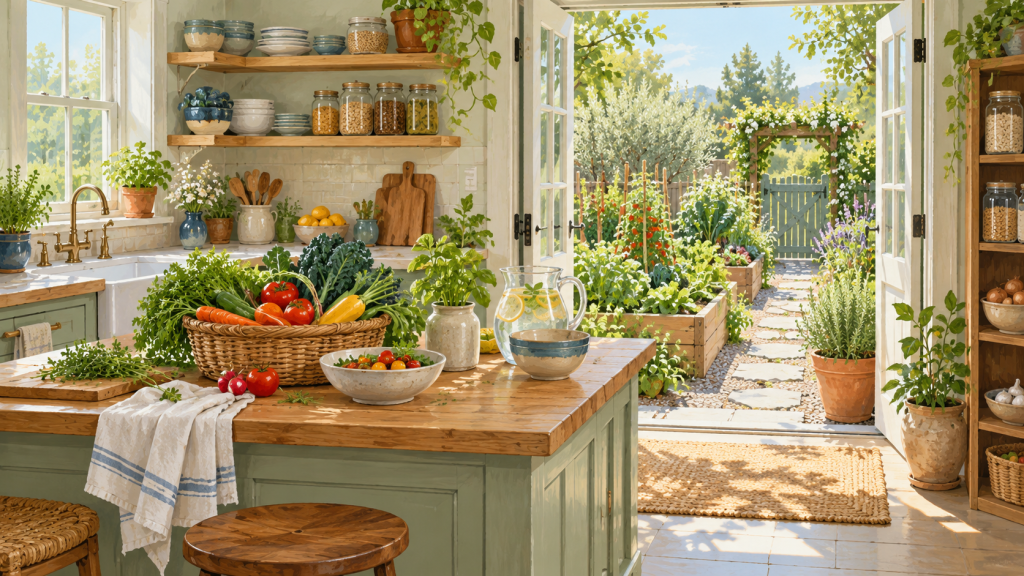
How can we share a garden that fits the people and the work?
Start with the people, permission and continuing care. Compare joining an existing garden with starting a shared site. Check the full route through the garden, not just the height of a planting bed, and confirm actual openings before paying or travelling.
Evidence checked October 15, 2026. No hands-on testing.
Choose a role before creating a site
This guide supports a household or community group deciding how to participate in shared growing. A personal plot, collective harvest, volunteer role and garden-organizing role require different amounts of time and responsibility. Write the goal first: growing food, learning, meeting neighbours, improving access or sharing produce. Ask prospective participants what they want to do and what would make that participation workable.
Compare the role and continuing duties
| Route | What to confirm | A useful first commitment |
|---|---|---|
| Join an existing garden | Actual opening/waitlist, full cost, task rules, water, access and season. | A visit and a clear agreement after the leader confirms availability. |
| Volunteer in shared work | Task, schedule, training, tools, supervision and physical demands. | One agreed session or role that fits the person. |
| Start or revive a garden | Land control, community decisions, infrastructure, money and continuing care. | A small written project with named responsibilities and an exit/continuity plan. |
| Use containers or another small space | Permission, water, reachable work area and feasible daily care. | A smaller project while a shared site remains unresolved. |
Check an existing garden directly
Denver Urban Gardens’ joining guidance is an existing catalog resource reused here. Its green map markers show potential availability, which the Garden Leader must confirm. A map colour is not a reserved plot. Ask about a waitlist, season dates, required tasks, water, storage, accessibility and all fees before registering.
DUG states an average annual plot fee of $40, set by the Garden Leader, plus $25 annual dues. The example total is $65 before supplies, travel or other costs; it is not a quote for a particular garden. DUG says inability to pay need not prevent participation, so ask about the actual assistance arrangement. School-based gardens have an additional leader-distributed background-check process. This research did not contact a leader or submit a form.
Plan shared governance and infrastructure
UMN’s community garden start-up guide asks who benefits, how decisions will be made, what capacity exists, who controls the land and which resources are available. Use those questions before asking people to build beds or donate money. A site can have willing volunteers and still lack an agreed water or maintenance arrangement.
- Define participants and decisions. Record who can join, how tasks/plots are assigned, how decisions and disputes are handled, and who can make spending commitments.
- Confirm land permission and duration. Identify the landowner and the actual use agreement. Ask who controls access, alterations and end-of-season obligations. Obtain appropriate local advice for unresolved terms.
- Check water and the growing site. Identify supply, who pays, access during closures, sunlight, drainage and soil questions. Investigate site history and appropriate testing rather than treating a fertility result as complete contamination clearance.
- Agree the work and backup. Assign watering, weeding, paths, tool storage, harvesting, deliveries and clean-up. Name a backup for tasks that cannot wait for the next workday.
- Build a budget from actual needs. Separate initial construction/material costs from recurring water, supplies, repairs and coordination. Confirm donations and fee assistance rather than assuming them.
- Keep a usable project record. Store agreements, responsible contacts, budgets, maps, soil reports and crop/harvest logs where authorized participants can use them. Manage account credentials separately with appropriate access controls.
- Agree who receives produce. State whether harvests belong to individual plots, shared members or recipients. Before donating, confirm the recipient’s current acceptance and handling requirements.
- Review a first season before expansion. Compare participation, workload, costs and actual produce use with the intended goal. Adjust responsibilities and scale with the group.
Walk through access with the people who will use it
OSU’s accessible-gardening publication considers different abilities, movement, reach, tools, watering and communication. Use it to ask better questions rather than applying a single bed dimension to everyone. A raised bed is only one part of participation.
Trace the actual sequence from arrival to departure: entrance, path surface, turns, reaching plants, moving water, tool storage, rest, shade and any needed facilities. Invite users to assess the real tasks and equipment. Keep hoses and tools out of travel paths, and agree who maintains that clear route. Where a public project needs technical or legal access review, obtain qualified current guidance; this guide does not certify compliance.
Make sign-up and work instructions usable too. Ask which formats, language, visual cues and ways of communicating help the group. Offer tasks with different physical demands rather than assuming every member can do the same work. Record the arrangements without publishing private health information.
Use a national network for a defined purpose
USDA’s People’s Garden overview invites community farms and gardens to explore a designation route and emphasizes growing and teaching about local food systems. Investigate its current conditions if the network would help your project. This catalog has not submitted the registration form, verified a benefit or established that designation supplies money, permission or accessibility approval.
Decision comparison: join, adapt or organize
Existing garden fits
Confirm a real opening, full costs, tasks and access arrangements with the responsible leader.
Participation needs changes
Walk through real tasks with users. Agree feasible adaptations, maintenance and responsibility.
A new site is needed
Resolve permission, water, soil questions, decisions, budget and continuing care before construction.
Text alternative: Join after a leader confirms an opening and workable conditions. Adapt participation through a user-informed task review. Start a new site only when permission, infrastructure and continuing responsibilities are resolved.
Common errors and your next action
- An availability marker is a lead, not confirmation.
- A low plot fee does not describe supplies, travel, duties or the total cost.
- A bed labelled accessible does not establish that the entrance, path and tasks work for a participant.
- A garden can fail during holidays unless watering and maintenance have named backups.
- Surplus is useful only when someone can receive and use it under agreed conditions.
Your next action: choose a role and list your practical needs, then confirm one existing opportunity or complete a small group project record. Keep unresolved permission, access and care questions visible before anyone commits money or construction work.
Resources and their limitations
Denver Urban Gardens — Join a community garden
Desk-reviewed. Denver Urban Gardens
Explains how to confirm potential plot availability, costs and requirements with a Garden Leader.
Access and cost: DUG states an average $40 annual plot fee set by each Garden Leader plus $25 annual DUG dues. It states inability to pay need not prevent participation; ask the leader. No actual plot, total, waiver or registration confirmed.
Use it: Use the map as a lead; contact the Garden Leader to confirm a plot or waitlist, requirements, accessibility and total costs. School-based gardens have an additional documented background-check process.
Basis and limits: Green markers mean potential availability, not a reservation. Fees and individual conditions can change. The stated average is not a quote. No background form, payment or communication submitted.
Alternatives: Other community gardens; an authorized shared-space project; a small container garden if the site and care fit.
UMN — Community garden start-up guide
Desk-reviewed. University of Minnesota Extension
A practical question list for shared decisions, land use, water, soil, crops, work, budgeting and continuity.
Access and cost: Free public reading; project materials, professional advice and any separately linked services may cost extra. No practical trial or purchase performed.
Use it: Work through the community, infrastructure, soil and care questions with the group. Keep shared agreements, budgets, contact roles, soil reports and garden records in an accessible project record.
Basis and limits: July 17, 2026 Minnesota publication; no Colorado land-use permission or soil result established. Do not put shared account passwords in an open binder; access control needs its own arrangement. Linked templates, donations and local recipients not individually verified.
Alternatives: Join an existing garden; start a small authorized shared plot; volunteer without managing a site.
OSU — Gardens are for everyone
Desk-reviewed. Oregon State University Extension
Prompts a garden-access review that includes movement, reach, water, rest, tools and communication rather than only bed height.
Access and cost: Free public reading; project materials, professional advice and any separately linked services may cost extra. No practical trial or purchase performed.
Use it: Read How to create accessible gardens, Navigate with ease and Adaptive tools. Walk through the actual tasks with prospective users and document obstacles before selecting equipment.
Basis and limits: Design education, not a personal functional assessment, engineered plan or accessibility-law compliance certification. Dimensions, third-party ADA links, universal surface claims and sting/health assurances are not adopted as controlling standards. No path or tool tested.
Alternatives: A smaller reachable container project; modifying an existing shared garden with user input; qualified local design/access advice.
USDA — The People’s Garden
Desk-reviewed. USDA
A national entry point for community-garden learning and a possible voluntary designation route.
Access and cost: Free public reading; project materials, professional advice and any separately linked services may cost extra. No practical trial or purchase performed.
Use it: Read the initiative overview and investigate current registration conditions if designation would help an established community project. Confirm with the program before sharing project information.
Basis and limits: Overview only: linked registration form, actual enrollment, benefits, response and 17-hub description were not independently verified. Designation is not treated as a grant, site approval, food-safety clearance or proof of accessibility. No form submitted.
Alternatives: A local community-garden network; Extension planning guidance; an independent shared garden without program enrollment.
Sources and review notes
The resource evaluations above use the following original pages. Public websites were checked on October 15, 2026 in America/Denver (October 16 UTC). A successful capture does not establish every linked page or individual result. No hands-on testing occurred.
- Denver Urban Gardens — Join a community garden
- UMN — Community garden start-up guide
- OSU — Gardens are for everyone
- USDA — The People’s Garden
Related guides
Urban ecology and shared green space; containers; soil fertility and compost. Life event: finding growing space, sharing a neighborhood project or adapting participation after a change in mobility.
Examples are teaching aids; no course completion, field navigation or practical intervention was tested.
Corrections: email director@victimsguide.com with the guide title, the point to correct and an original source. Please omit private medical, policy and identity records.

