
Make it easy for a small group to begin and to return. A useful first gathering has a clear activity, a manageable cost, a place people can reach and room for beginners to take part without having to perform or publish their work.
Evidence checked October 17, 2026 (America/Denver). Version 1.0. Original-source desk review; no practical testing.
What this guide helps you do
A planning guide for shared creative practice and finding local arts routes. Provider examples are from Boulder County; dates, places, costs, instruction and accessibility need confirmation for the actual gathering. The guide makes no health-outcome or teaching-quality claim.
Choose the kind of gathering
Decide whether people want to learn a skill, work alongside each other, look at art, share stories or prepare a small display. A studio visit and a hands-on workshop offer different experiences. Give the invitation one concrete purpose and explain whether a beginner can simply watch, bring an unfinished piece or try a small activity.
Find a setting with suitable support
Ask a library, instructor or community studio about the activity, group size, materials and help available. STUDIO 24 describes creative-reuse workshops and Open Studio hours. Groundworks lists material-based classes. A page listing does not reserve a place, supply training or establish that a particular tool is available when your group arrives. Source: Boulder library makerspaces and STUDIO 24 print tools. Source: Groundworks Art Lab community classes.
Make the invitation practical
State the time, duration, location, expected cost, materials to bring and contact for questions. Ask about transport, seating, language, noise, age or support needs without requiring people to disclose personal information to the whole group. Offer a clear way to attend briefly or participate in a simpler form. Confirm arrangements with the host rather than promising them yourself.
Keep the first activity small
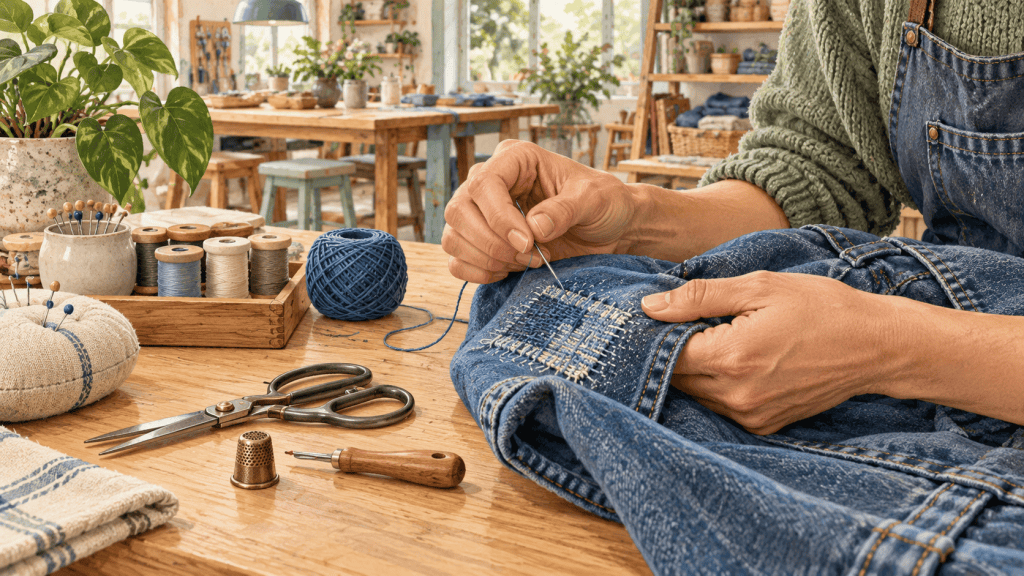
Choose an activity that can be understood and paused: a paper sample, a drawing prompt, repair planning or discussion of work in progress. Use facility instruction for tools and processes. Share the materials budget and explain what participants can keep. Leave time for setup, cleaning and a short conversation about what people would like to do next.
Explore the local arts community deliberately
An artist visit or gallery conversation can help people discover materials, practices and local contacts. Open Studios offers a route into Boulder County visual arts, but its checked homepage prominently lists October 10–11, already past at this review. Confirm a future event directly; do not treat a continuing webpage as an open invitation on any date. Source: Open Studios Boulder County.
Agree on sharing and a next meeting
Ask before photographing people, their work or a discussion. Let participants choose whether a piece is private, shown within the group or offered for a wider display. Credit the maker and any source material used. End by recording what helped people take part, what was awkward and whether there is interest in a repeat gathering.
A record you can use
| Record | What to write down |
|---|---|
| Purpose | Learn, make, observe, share or display; one activity for this meeting. |
| Host and access | Confirmed place, contact, support, timing and registration. |
| People and invitation | Who is welcome; skill level, transport and participation options. |
| Materials and costs | Shared supplies, individual costs, setup and cleaning. |
| Permission and credit | Photography, discussion, display and ownership choices. |
| What to carry forward | Feedback, unfinished questions and the next manageable gathering. |
Learning route
- Invite: Name a small shared activity.
- Confirm: Check place, costs and support.
- Make: Leave room for different ways to join.
- Return: Record feedback and a next step.
Checklist
- The activity and level are clear.
- The host has confirmed the practical arrangements.
- Costs and materials are explained before attendance.
- People can take part without public performance or photography.
- The group has time to set up and clean.
- Someone keeps the agreed next-step record.
Resources and their limitations
Boulder library makerspaces and STUDIO 24 print tools
Boulder library makerspaces and STUDIO 24 print tools — Boulder Public Library District
Use. Read the current STUDIO 24 theme and contact staff about the actual workshop, registration, materials, access requirements and support for the group.
Access and cost. The library describes its makerspaces as free community workshops; supplies and tool/program conditions vary.
Review and limits. The checked page lists June–November 2026 creative-reuse workshops and Open Studio hours plus craft equipment. It is not a reservation, confirmed equipment entitlement or recording-room listing. General makerspace rules remain relevant; no session attended.
Groundworks Art Lab community classes
Groundworks Art Lab community classes — Groundworks Art Lab
Use. Use the class categories to ask about a beginner project, instruction, group arrangements, access, materials and the total cost before committing.
Access and cost. Free online reading; classes, materials, services and travel may cost extra.
Review and limits. The homepage advertises an October–December session and links to clay, print, metal, wood, glass and youth programs. This is a provider listing, not a verified open place or teaching-quality assessment. Previous Studio Arts Boulder alias is preserved in provenance; no booking or visit tested.
Open Studios Boulder County
Open Studios Boulder County — Open Studios Boulder County
Use. Use the organization’s current pages to identify an event or artist contact, then confirm the date, location, access and whether the activity includes making, observing or buying art.
Access and cost. Public information freely readable. Confirm the cost and access of the specific event, class or visit; art purchases and travel are separate.
Review and limits. At this review the homepage prominently lists October 10–11, already past on October 17. It does not establish an event available today. Artist addresses were not republished in the guide. A studio tour is not automatically a shared making class; no visit tested.
Historical starting point
The Spring 1969 Communitas review discusses community life and describes creative work and small cultural groups as part of it. Shared arts practice is the modern focus here. Historical social claims and examples are context rather than evidence that a present-day gathering will produce a particular outcome. Locator: Whole Earth Catalog — Spring 1969, PDF page 81, printed page 79.
Related guides
- Printing, bookmaking and paper crafts
- Photography, film and storytelling
- Design for everyday use — browse the Public Library
Last substantive desk review: October 17, 2026. Sources retain their own dates and geographic limits. Local services and individual products require a fresh check at the time of use. For a correction, retain the page title, source and passage in question.

