
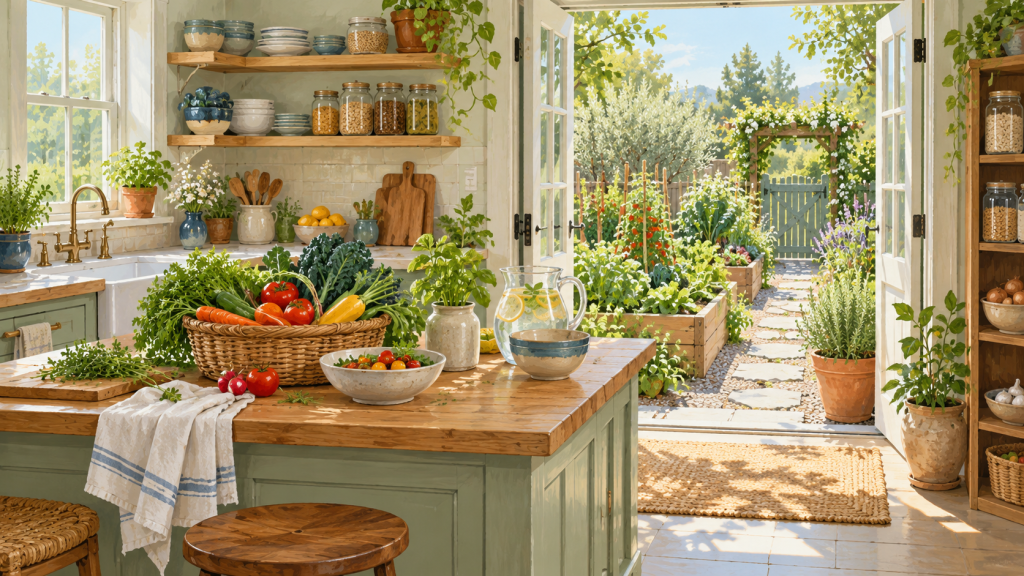
What can we use, preserve or share while the harvest is still suitable?
Count the food and the time available to handle it. Reserve what the household can use, choose a tested preservation method for suitable surplus, and confirm a recipient before harvesting or transporting a donation. Keep the food’s identity and handling needs with it.
Evidence checked October 16, 2026. Version 1.0. Desk review; no hands-on testing.
What this guide helps you do
For household garden harvests, food-waste prevention and arranging a produce donation. Preservation methods are covered in companion guides. This is not a commercial food-service plan, a promise of donation acceptance, or a determination of legal immunity or tax treatment.
Make a usable harvest inventory
Walk through the available food and record the crop, approximate quantity, condition and when it needs attention. Include what is already in the refrigerator, freezer and pantry so the new harvest does not hide older food. EPA’s planning guidance begins with food on hand and quantities that will actually be eaten. Choose meals and realistic portions before committing the whole harvest to another project. Leave room to record what was used, preserved, shared or discarded; those observations can improve the next planting plan. Source: EPA household food-waste prevention.
Choose preservation by capacity and a tested method
Separate food for immediate use from food that can wait under appropriate storage conditions. For suitable surplus, compare the actual freezer space, equipment, time, energy and packaging with a complete current food-specific method. The companion freezing, canning, fermentation and crop-storage guides provide entry points; none makes every food suitable for every method. Save the original instructions with the batch. A large harvest can justify a smaller planting next season, a shared work session or an earlier donation arrangement rather than a rushed process.
Ask the recipient before making the trip
EPA advises checking what a local food bank or rescue operation will accept. Ask about the specific crop, quantity, condition, packaging, donation days and delivery location. Confirm whether they accept homegrown produce and who will be present to receive it. Prepared foods and home-preserved products can involve different requirements; do not assume produce acceptance covers them. Write down the confirmation date and a fallback plan. A successful directory search is only the beginning of an arrangement, and an unattended doorstep is not an agreed handover. Source: EPA food-donation navigator.
Use the directory as a lead to a real conversation
AmpleHarvest’s finder has location, distance and donation-day controls. Use it to identify possible nearby recipients, then confirm each listing directly. This review inspected the finder interface rather than running a local search, calling a pantry or testing a donation. If a listing is out of date or a recipient is full, return to the EPA navigator or contact another local organization. Avoid harvesting extra food for a delivery that no one has agreed to accept. Keep the confirmed contact details where another gardener can find them. Source: AmpleHarvest pantry finder.
Keep safe handling through the handover
Use the FDA handling reference for cleaning, separation and appropriate chilling. Keep perishable food under the conditions its specific guidance requires during preparation and transport. Describe what the food is and tell the recipient about relevant handling or storage history; do not conceal uncertainty or use donation to pass an unresolved safety problem to someone else. Ask the organization how it wants produce packed or washed. Follow the confirmed requirements and keep the delivery within the time and storage capacity you actually have. Source: FDA safe food handling.
Turn the outcome into shared practical knowledge
Record the food and amount offered, the recipient’s acceptance rules, the confirmed appointment and what actually happened. A short note on usable quantities, travel and packaging can make the next donation easier. Keep personally identifying recipient information out of public guide material unless authorized. Review recurring waste before the next purchase or planting, and share the process with another household member. Evidence of a completed local handover belongs beside the directory lead as a different kind of knowledge; this library’s desk review has not supplied that practical test.
A pathway to practice
- Inventory the harvest: Food, condition, time window
- Choose a realistic route: Use, tested preservation, share
- Confirm and handle: Recipient, packing, storage
- Record the handover: Outcome, sources, next harvest
Resources and their limitations
EPA household food-waste prevention
Use it for: Use food already on hand and buy quantities the household can actually use.
Access and cost: Public webpage freely readable; equipment, food, laboratory work, installation and operating costs are separate.
How to use it: Read Planning and Shopping Tips and the food-specific storage and preparation discussion; use the actual food-safety instructions with them.
Evaluation and limits: Visible June 22, 2026 update does not establish that every linked tool was revised. No household waste or savings were measured. Broad savings and food-quality claims are not adopted for an individual food.
Alternatives: FoodKeeper, food-specific extension guidance and the FDA handling reference.
Open EPA household food-waste prevention
EPA food-donation navigator
Use it for: Identify a receiving organization and learn which food it can accept.
Access and cost: Public webpage freely readable; equipment, food, laboratory work, installation and operating costs are separate.
How to use it: Read Safety Basics and Where to Donate; contact the recipient before preparing or transporting a donation.
Evaluation and limits: No recipient, pickup, acceptance rule, donation liability protection or tax benefit was verified for a particular donor. Linked statutes and legal summaries are research leads, not an individual legal determination.
Alternatives: A local pantry or food-rescue organization; local health department; AmpleHarvest directory.
Open EPA food-donation navigator
AmpleHarvest pantry finder
Use it for: Locate a potential recipient for surplus garden produce.
Access and cost: Public finder page freely readable. Transport and any other participation costs were not checked.
How to use it: Search for your area in the live finder, then contact the listed pantry to confirm donation days, produce accepted and handover arrangements.
Evaluation and limits: Finder landing page and day filters inspected; no location search, pantry listing, opening time, route or actual donation tested. A directory lead is not confirmed capacity.
Alternatives: EPA donation navigator; directly verified local pantry or food-rescue organization.
Open AmpleHarvest pantry finder
FDA safe food handling
Use it for: Build a clean, separate, cook and chill routine for ordinary home meals.
Access and cost: Public page and print link freely readable; thermometers, food, water, energy and storage equipment cost extra.
How to use it: Read all four steps and the food-specific temperature table. Use a food thermometer and appliance thermometer rather than appearance or touch.
Evaluation and limits: General household guidance, not a commercial kitchen plan, validated canning process or complete illness-response protocol. No kitchen conditions or instruments were tested.
Alternatives: FoodSafety.gov temperature chart; USDA FSIS leftovers guidance; appropriate health professional for increased-risk needs.
Checklist
- Food, quantity, condition and time window recorded
- Household use and suitable preservation capacity compared
- Recipient confirmed the actual food and amount
- Donation day, packaging, transport and handover agreed
- Handling requirements and uncertainties communicated
- Actual outcome and next-season changes recorded
Related guides
Vegetable gardens (SG-D03-S02); Meal planning and household nutrition (SG-D05-S04); Food hygiene and kitchen safety (SG-D05-S08); Pantries and household reserves (SG-D06-S01); Canning and bottling (SG-D06-S02); Drying, freezing and dehydration (SG-D06-S03); Fermentation and traditional preservation (SG-D06-S04); Root cellars and cool storage (SG-D06-S05).
From the Whole Earth registry to current practice
The Spring 1969 Ball Blue Book review (PDF page 91, printed page 89; registry entry WE69S-E203 and lesson WE69S-L023) connects preserving a harvest with carrying food into winter. We use that as a question about planning surplus. Modern pantry donation and acceptance rules come from current resources; they are not claims about the catalog page.
Whole Earth Spring 1969 archive edition
Sources and review notes
No harvest, food history, recipient listing, acceptance rule, transport route or delivery was tested. EPA’s legal and tax links are further research leads; no individual protection or benefit is claimed. Historical harvest preservation inspires the surplus-planning question; it does not establish modern donation rules.

