
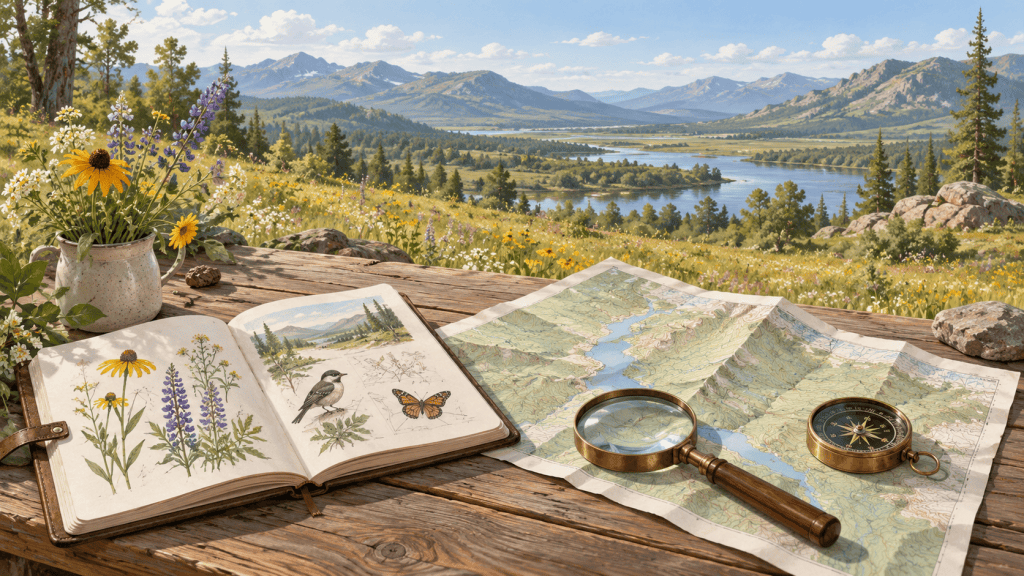
What small habitat improvement fits this place and the care I can sustain?
Observe the existing site, identify a specific habitat need, and choose plants and maintenance that fit the region and conditions. Begin with a manageable project and record what happens. A planted area is not, by itself, evidence that biodiversity increased.
Evidence checked October 15, 2026. No hands-on testing.
Define a small, observable purpose
Choose a purpose such as filling a seasonal gap in flowering habitat in a yard or improving the care of an existing native planting. Identify who controls the site and who will maintain it. Begin at a size that fits available time, water, access and funds. Large disturbed areas, stream work, steep slopes or other complex projects need evidence and expertise beyond this garden-scale introduction.
Inspect before choosing plants
CSU Extension links Colorado native plants to particular ecoregions, soils, moisture and climate. Its advice begins with examining existing vegetation and the intended use of the space. “Native” alone does not identify the right plant for a shaded, wet, dry, compacted or otherwise specific location. Keep useful existing habitat visible before deciding what to change.
Prepare a project sheet
- Record the site and authority to act. Define the area, present use and who must agree to changes. Check actual access, property, utility and local project requirements before disturbing ground or changing shared land.
- Inventory conditions and existing plants. Record light, apparent moisture/drainage, soil information, surrounding vegetation and the care already provided. Keep uncertain plant identifications unresolved and obtain help before removing a plant based on an app suggestion.
- Name the habitat gap. Is the concern seasonal food, nesting/overwintering habitat, exposure to pesticides or a different need? The Xerces assessment entry and checklist can organize that inquiry. An unmeasured concern should not become an invented habitat score.
- Compare a few appropriate actions. Options may include changing a maintenance practice, protecting an existing feature, adding a small planting or joining a supervised local project. Compare the purpose, regional suitability and continuing work for each.
- Confirm species and material choices. Use regional references and knowledgeable local assistance. Record the plant’s scientific name, source and reason it fits. A broad national list or conservation-plant release does not establish suitability for every site.
- Budget for establishment and continuing care. Include materials, delivery, tools, water, observation time and replacement. Agree who will do the work and when a struggling planting will be reassessed. Obtain current quotes for the actual scope.
- Set a baseline and revisit. Photograph from a repeat position and record what was present before the change. Choose comparable follow-up observations of plant condition, flowering periods and observed visitors. Note season, effort and other changes that affect interpretation.
A practical habitat-project review
| Decision | Useful evidence | A reason to pause |
|---|---|---|
| Where and why? | Site conditions, authority and a specific purpose | The project depends on unconfirmed permission or an unknown site constraint. |
| Which action or plant? | Regional/site match and reliable identification | A label says native without identifying the species or region. |
| Can it be maintained? | Water/time plan, responsible person and quotes | The plan budgets for purchase but no continuing care. |
| Did it help? | Comparable before/after records and stated limits | More observations are attributed solely to the planting without checking effort or season. |
Use the checklist as a question tool
Xerces’s landing page describes evaluating habitat and prioritizing improvements. The linked two-page action checklist groups food, nesting/overwintering and pesticide-exposure concerns. It also warns that some listed plants do not fit every region or site. This catalog reviewed that checklist and the landing description; it did not apply or validate the full assessment guide. No pesticide, mowing, dead-wood or planting prescription is automatically suitable for every property.
Find technical support when needed
The NRCS Plant Materials Program provides conservation-plant information, technical documents and a directory. Use it to locate material relevant to the region and purpose, and confirm applicability. This review does not establish eligibility for assistance, funding, availability of a particular plant or that every conservation plant in the program is native.
A budget that exposes its assumptions
Hypothetical example: six plants at $8 each, $20 of other materials and a $25 delivery charge total $93. That excludes tools, tax, water, labor and replacement. The example is not a planting density, a nursery quote or a predicted ecological benefit. Put actual quotations and the care commitment beside the proposed action before buying.
Decision map: choose a manageable habitat action
Understand the existing site
Confirm authority, identify plants and record regional/site conditions before removal or purchase.
Match action to purpose
Compare habitat needs, local suitability, alternatives and the continuing care required.
Learn from a small project
Keep baseline and follow-up observations; revise the plan without claiming an unmeasured biodiversity gain.
Text alternative: First understand the site and permission to act. Then select an appropriate purpose and action. Start small enough to maintain and use comparable observations to guide the next decision.
Common obstacles and next action
- A seed mix or garden photograph may hide species unsuited to the actual region or conditions. Obtain the species list and reliable local guidance.
- A plant-ID app suggestion is a lead. CSU recommends corroboration, including books, descriptions or an Extension specialist.
- One season of visiting insects does not establish a long-term population outcome. Keep the observation method and limits visible.
- If a new planting is beyond the available care, protecting an existing feature or volunteering with a competent organizer may be a useful alternative.
Complete the project sheet for one small area. Mark the most important unknown and obtain an answer before selecting materials. Keep unresolved identification or access questions on hold.
Resources and their limitations
CSU Extension — Native Plants
Desk-reviewed. Colorado State University Extension
Connects plant choice to Colorado ecoregion, soil, moisture, climate and the intended use of the site.
Access and cost: Public article and regional reference links. Individual plants, nursery stock, prices and linked books/apps were not purchased or independently rated.
Use it: Inventory existing plants and site conditions. Identify the Colorado ecoregion and intended use. Follow regional lists and ask Extension for unresolved identifications before choosing species.
Basis and limits: Native does not mean suited to every Colorado site or every use. CSU warns identification apps are not always accurate and recommends corroboration. Article metadata published October 3, 2025, modified October 1, 2026; these are page metadata, not a plant-specific test.
Alternatives: Local Extension specialist; Colorado Native Plant Society regional guides; a professional restoration plan where complexity warrants it.
Xerces — Pollinator habitat assessment and action checklist
Desk-reviewed. The Xerces Society for Invertebrate Conservation
Helps identify pollinator habitat needs and prioritize a manageable improvement before buying plants.
Access and cost: Landing page and two-page checklist PDF were publicly retrievable. No payment/sign-in shown. Full assessment-guide PDF linked from the page was not captured or scored.
Use it: Read the stated assessment purpose and the checklist. Note food, nesting/overwintering and pesticide-exposure questions. Adapt ideas to region/site and confirm plant suitability using regional expertise.
Basis and limits: Landing page serial 19-038, version _02; checklist filename 19-050_02. Two PDF pages extracted; text/table symbols may be imperfect. The checklist warns some listed plants are inappropriate for some regions/sites. No habitat score or ecological outcome tested.
Alternatives: CSU regional guidance; NRCS technical documents; a locally supervised habitat project.
USDA NRCS — Plant Materials Program
Desk-reviewed. USDA Natural Resources Conservation Service
A route to technical information and regional contacts when a habitat project exceeds a simple garden trial.
Access and cost: Public overview and directory/document links. No assistance application, eligibility determination or service quote was requested; individual program terms remain unverified.
Use it: Use the technical-document and program-directory links to find information for the region and purpose. Confirm that a proposed plant/material is appropriate before treating a release or document as a recommendation for the site.
Basis and limits: This is a program hub, not a reviewed seed mix, nursery guarantee or promise of assistance. The program covers conservation plants broadly; it does not establish that every listed plant is native or suitable everywhere.
Alternatives: CSU/other regional Extension; local restoration practitioners; a supervised volunteer project.
Sources and review notes
The resource evaluations above use the following original pages. Public websites were checked on October 15, 2026 in America/Denver (October 16 UTC). A successful capture does not establish every linked page or individual result. No hands-on testing occurred.
- CSU Extension — Native Plants
- Xerces — Pollinator habitat assessment and action checklist
- USDA NRCS — Plant Materials Program
- Habitat Assessment Guide for Pollinators in Yards, Gardens, and Parks
Related guides
Local ecology and natural history; watersheds, soil and landscape; design and problem solving.
Examples are teaching aids; no course completion, field navigation or practical intervention was tested.
Corrections: email director@victimsguide.com with the guide title, the point to correct and an original source. Please omit private medical, policy and identity records.

